Ancient and Early History of Ballari District
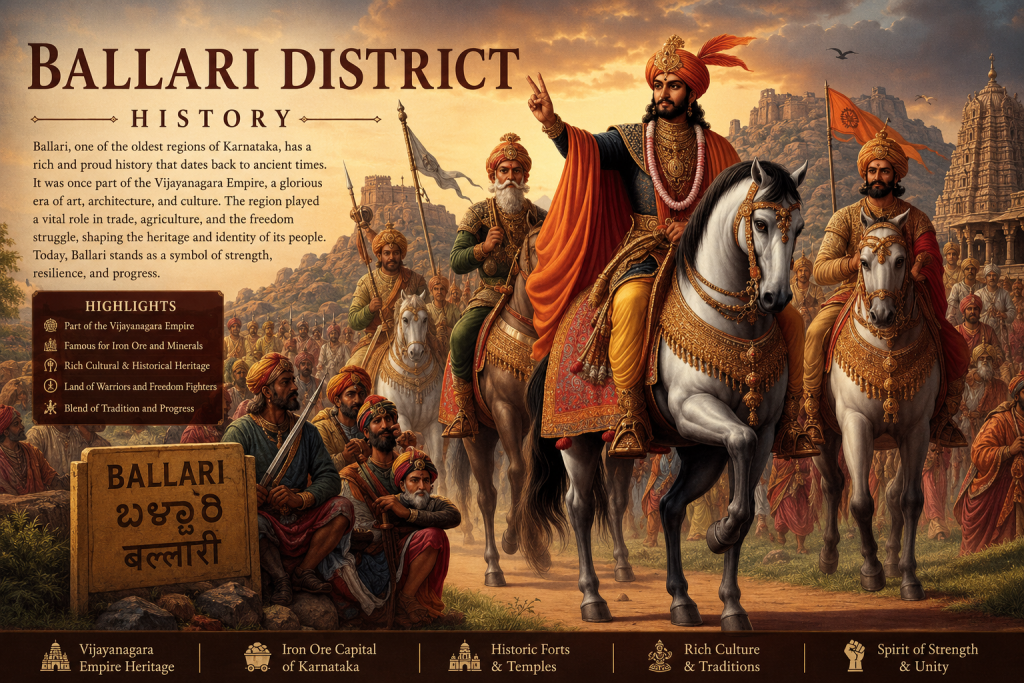
at least the 12th century, with inscriptions from 1131 AD mentioning the name “Ballare.” The region was ruled by several important dynasties, including the Chalukyas, Rashtrakutas, Hoysalas and the Vijayanagara Empire. Ballari and its surrounding areas became particularly prominent during the Vijayanagara period, with Hampi serving as the magnificent capital of the empire. Hampi developed into a major centre of trade, culture, art and architecture and remains one of the most important historical heritage sites inVijayanagara period, with Hampi serving as the magnificent capital of the empire. Hampi developed India.After the decline of the Vijayanagara Empire following the Battle of Talikota in 1565, Ballari came under the control of various local Palegars, Muslim rulers and the Marathas at different periods. In the 18th century, Hyder Ali took control of Ballari Fort, which was later strengthened and modified. During the British period, Ballari became part of the Madras Presidency. In 1953, the district was transferred to the then Mysore State, which later became Karnataka. In 2020, the former Ballari district was reorganized, and the Vijayanagara district was created as a separate district.
Ballari District, Karnataka
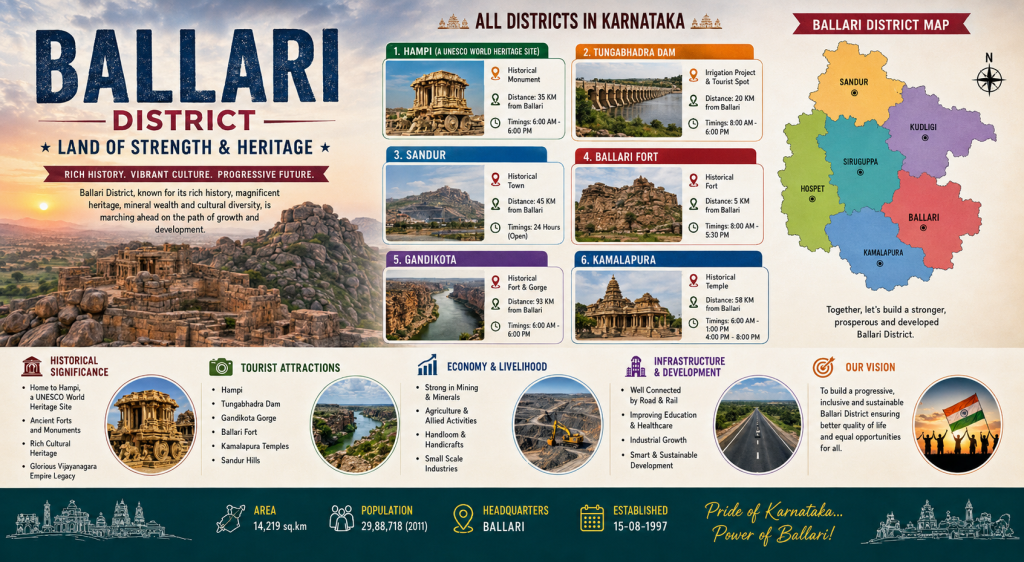
Ballari District, located in the eastern part of Karnataka, is a region known for its rich history, cultural heritage, natural landscapes, agriculture, and mineral resources. The district has a significant historical connection with the Vijayanagara Empire, with the magnificent ruins of Hampi located nearby. Ballari is also famous for its forts, temples, traditional culture, and vibrant local communities. The district’s economy is supported by agriculture, mining, industries, trade, and small-scale businesses. Important attractions such as Ballari Fort, Daroji Sloth Bear Sanctuary, and nearby historical sites attract visitors from different parts of Karnataka and India. With its blend of historical importance, natural beauty, economic activities, and cultural traditions, Ballari holds temples, traditional culture, and vibrant local communities. The district’s economy is supported by agriculture, mining, industries, trade, and small-scale historical sites attract visitors from different parts of Karnataka and India. With its blend of historical
Major Towns and Population Details
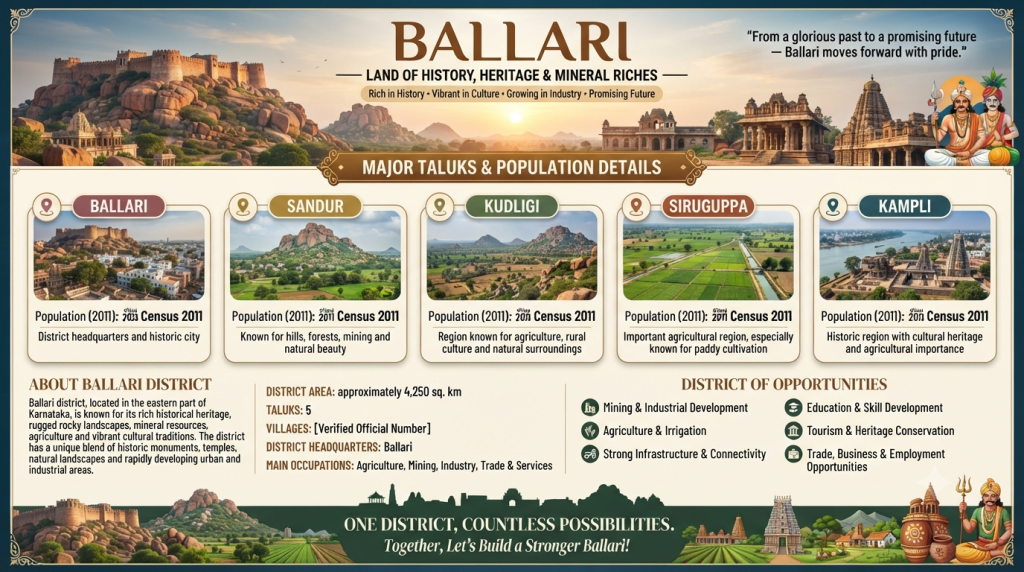
Ballari district, located in the eastern part of Karnataka, is renowned for its rich history, cultural heritage, majestic forts, ancient temples, rocky landscapes, and mineral resources. The district is home to historic attractions such as Ballari Fort and several important heritage sites. Agriculture, mining, industry, trade, and services form the major economic activities of the region. With its unique blend of history, nature, culture, and economic potential, Ballari continues to grow as an important district of Karnataka.Ballari district, located in the eastern part of Karnataka, is renowned for its rich history, cultural heritage, majestic forts, ancient temples, rocky landscapes, and mineral resources. The district is home to historic attractions such as Ballari Fort and several important heritage sites. Agriculture, mining, industry, trade, and services form the major economic activities of the region. With its unique blend of history, nature, culture, and economic potential, Ballari continues to grow as an important district of Karnataka.
Important Town in Ballari Distric
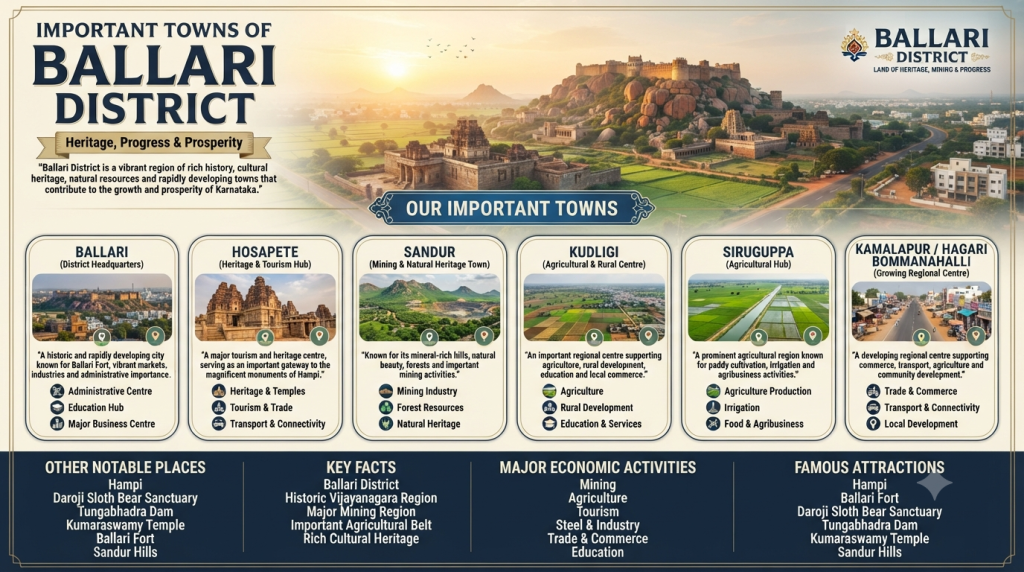
Ballari district is an important region of Karnataka known for its historical heritage, t headquarters, is the major commercial and administrative centre. Hospet (Hosapete) is another important town, well known for its connection to the historic Vijayanagara Empire and its proximity to Hampi. Siruguppa is an important agricultural town, particularly known for paddy cultivation. Kudligi and Sandur are significant towns associated with agriculture, forests, mineral resources, and mining activities. Huvina Hadagali is known for agriculture and traditional handicrafts. These towns play an important role in the economic, social, cultural, and another important town, well known for its connection to the historic Vijayanagara Empire and its proximity to Hampi. Siruguppa is an important agricultural town, particularly known for paddy cultivation. Kudligi and Sandur are significant towns associated with agriculture, forests, mineral resources, and mining activities. Huvina Hadagali is administrative development of Ballari district.
Economy of Ballari
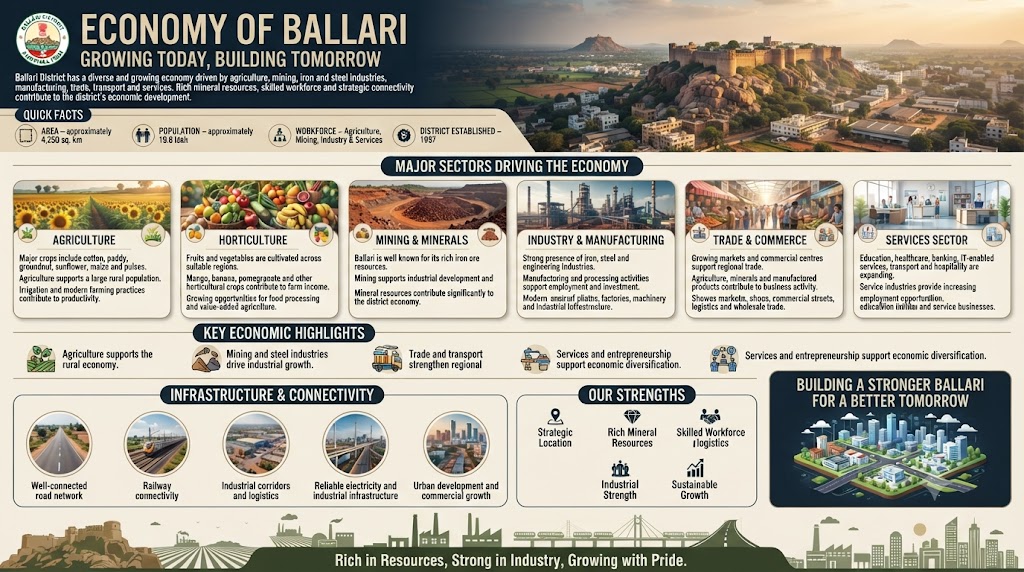
The district is well known for its rich deposits of iron ore and has a strong mining and mineral-based industrial sector. Agriculture is another major source of home to steel and other manufacturing industries, which contribute significantly to employment and economic development. The district’s towns and markets support trade, transport, retail, and service activities, while tourism and handicrafts provide additional opportunities for local communities. With its an important role in the livelihood, with crops such as cotton, groundnut, paddy, sunflower, maize, and various pulses cultivated in different parts of the district. Ballari is also home to steel and other manufacturing industries, which contribute significantly to employment and economic development. The district’s towns and markets support trade, transport, retail, and opportunities for local communities. With its natural resources, agricultural potential, industrial base, and improving infrastructure, Ballari continues to play an important role in the economy of Karnataka.
Geography and Natural Features
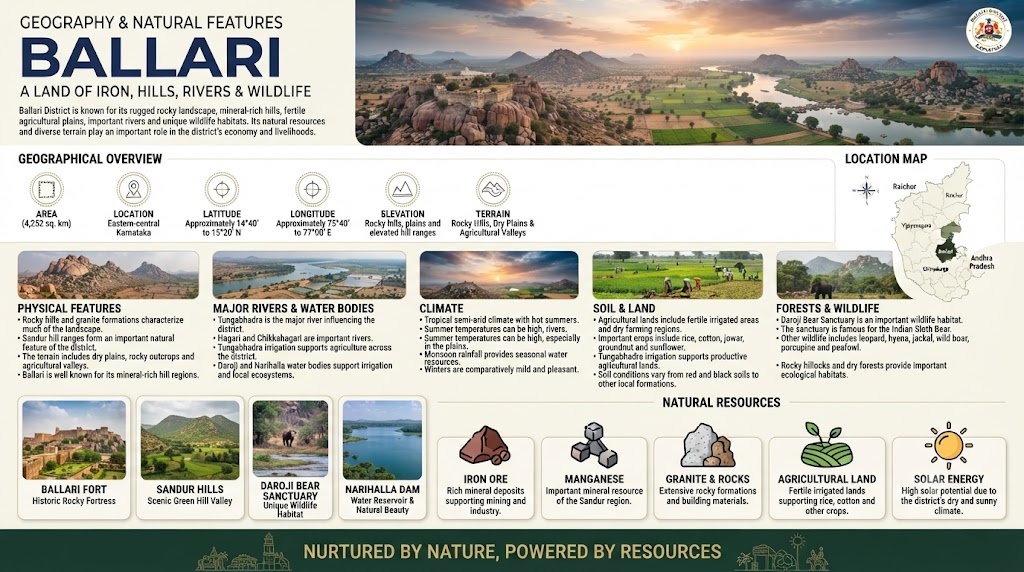
Ballari district, located in the eastern part of Karnataka, is characterized by a predominantly dry and semi-arid climate, with vast plains, rocky and sunflower cultivated in different parts of the district. The natural landscape, historic hills, forests, rivers, and rocky formations together give Ballari its unique landscapes, hills, and scattered forest areas. The district forms part of the Deccan Plateau and has undulating terrain with several prominent hill ranges and granite rock formations. The Tungabhadra River is an important natural water resource, supporting agriculture and local livelihoods. The region is known for its rich mineral resources, particularly iron ore, and its distinctive red and rocky soil. Agriculture is mainly dependent on rainfall and irrigation, with crops such as cotton, groundnut, paddy, jowar, and sunflower cultivated in different parts of the district. The natural landscape, historic hills, forests, rivers, and rocky formations together give Ballari its unique geographical character.
Climate and Natural Features
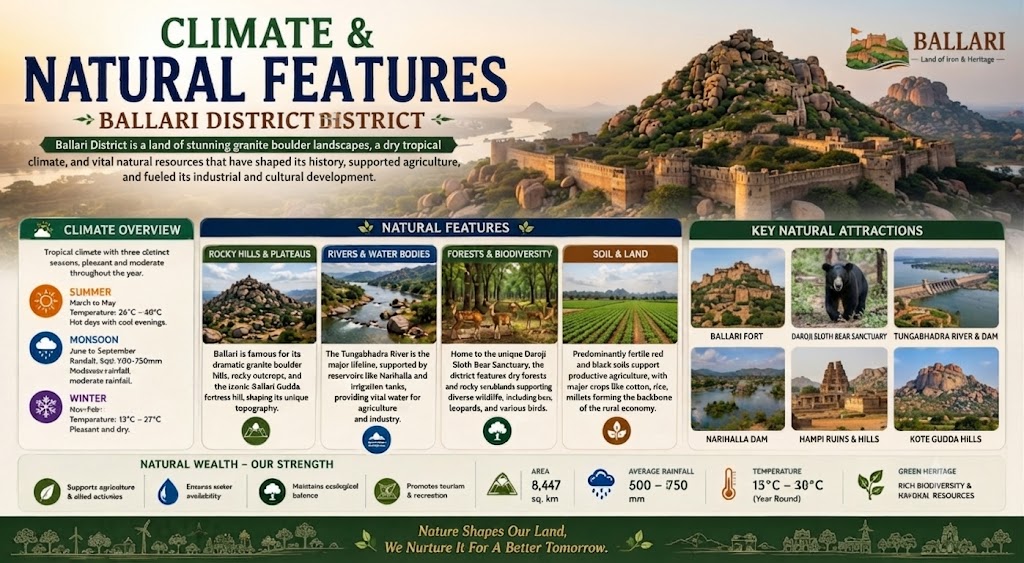
Ballari district experiences a predominantly semi-arid and dry climate, with hot summers, moderate monsoon rainfall, and relatively mild winters. The district receives most of its rainfall during the southwest monsoon season, while the summer months are generally hot and dry. The natural landscape is characterized by rocky hills, undulating terrain, open plains, and patches of dry deciduous vegetation. The Tungabhadra River and other water bodies support agriculture and local ecosystems in parts of the district. The region is also known for its mineral-rich land, The district receives most of its rainfall during the southwest monsoon season, while the summer months are generally hot and dry. The natural landscape is particularly iron ore deposits, which have played an important role in the district’s economy. Agriculture, vegetation, hills, rivers, and mineral resources together form the nmineral-rich land, The district receives most of its rainfall during the southwest monsoo important natural features of Ballari district.